Why Pigment Red 177 Is Ideal for Plastic Coloration and Masterbatch Manufacturing
Plastic manufacturers are constantly looking for high-performance pigments that can provide bright and stable colors while maintaining excellent processing performance. When plastics are exposed to high temperatures, sunlight, chemicals, and mechanical stress, conventional pigments may experience fading, migration, or color changes. Pigment Red 177 is a high-performance organic red pigment that offers a strong combination of heat resistance, light fastness, weather resistance, and color stability, making it an excellent choice for demanding plastic coloration and masterbatch manufacturing.
Also known as C.I. Pigment Red 177, PR177 is an anthraquinone-based organic pigment widely considered for applications where long-term color durability is essential. From engineering plastics and general-purpose polymers to color masterbatch, automotive plastics, and outdoor plastic products, Pigment Red 177 can provide reliable red coloration under challenging processing and end-use conditions.
This article explains the key advantages of Pigment Red 177 for plastic coloration, its role in masterbatch production, important technical considerations, and how manufacturers can select the right Pigment Red 177 supplier.
What Is Pigment Red 177?
Pigment Red 177 is a high-performance organic red pigment belonging to the anthraquinone pigment family. It is recognized by the Colour Index as C.I. Pigment Red 177 and is known for its attractive bluish-red shade and excellent durability.
Unlike many general-purpose red pigments, Pigment Red 177 is designed for applications that require stronger resistance to heat, light, weathering, and chemicals. These properties make it particularly useful for plastic products that must maintain their appearance throughout processing and long-term use.
High-Performance Organic Red Pigment
PR177 combines strong color performance with excellent durability. This makes it suitable for plastic manufacturers that need more than basic coloration and require a pigment capable of maintaining stable performance under demanding conditions.
Suitable for Industrial Plastic Applications
Pigment Red 177 can be considered for various polymer systems and applications, including automotive plastics, engineering plastics, masterbatch, consumer products, packaging, and outdoor plastic components.
Why Pigment Red 177 Is Suitable for Plastic Coloration
Plastic processing often involves high temperatures, strong mechanical forces, and different additives or polymer systems. The pigment used in the formulation must remain stable throughout the manufacturing process.
Pigment Red 177 offers several properties that make it suitable for high-performance plastic coloration.
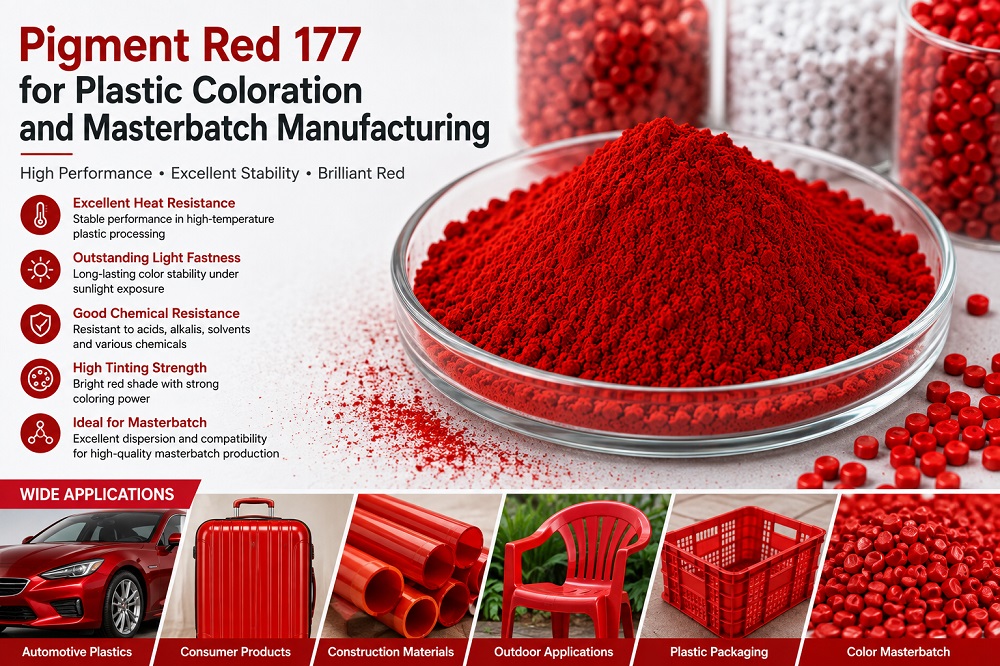
Excellent Heat Resistance
One of the most important requirements for plastic pigments is thermal stability. During extrusion, injection molding, blow molding, and other plastic processing operations, materials can be exposed to elevated temperatures.
Pigment Red 177 provides excellent heat resistance, helping maintain color stability during high-temperature processing. This makes it a valuable choice for applications where thermal stability is a major consideration.
Excellent Light Fastness
Plastic products used outdoors or near strong light sources can experience color fading when pigments have insufficient light stability.
Pigment Red 177 offers excellent light fastness, allowing colored plastic products to retain their red appearance for longer periods when properly formulated.
Good Weather Resistance
Outdoor plastic products may be exposed to sunlight, rain, humidity, temperature fluctuations, and atmospheric pollutants. These conditions can gradually affect pigment performance.
The excellent weather resistance of Pigment Red 177 makes it suitable for outdoor plastic applications where long-term color durability is required.
Good Chemical Resistance
Plastic components can come into contact with oils, fuels, cleaning agents, solvents, and other chemicals. A stable pigment can help maintain the appearance of the finished product under these conditions.
Pigment Red 177 provides good chemical resistance and is therefore suitable for selected industrial and automotive plastic applications.
Strong Color Strength
High tinting strength allows manufacturers to achieve the desired red shade with an efficient pigment concentration. This can help optimize formulation costs while maintaining strong and consistent coloration.
Pigment Red 177 for Masterbatch Manufacturing
Masterbatch is one of the most important methods for coloring plastics. A color masterbatch contains concentrated pigment dispersed in a polymer carrier and is later blended into the base polymer during plastic processing.
The quality of the pigment has a direct influence on the color strength, dispersion, consistency, and final appearance of the masterbatch.
High Pigment Concentration
Masterbatch manufacturers often need pigments that can be incorporated at relatively high concentrations while maintaining good dispersion. Pigment Red 177 can provide strong coloration and is suitable for high-performance color masterbatch formulations.
Good Dispersion
Uniform pigment dispersion is critical to masterbatch production. Poor dispersion can lead to color streaks, uneven surfaces, reduced color strength, and production problems.
A properly selected Pigment Red 177 grade with suitable particle characteristics can provide good dispersion in compatible polymer carrier systems.
Consistent Color Production
Masterbatch manufacturers supply color concentrates to downstream plastic processors that expect consistent color from one production batch to another. Stable pigment quality helps manufacturers maintain consistent color performance throughout production.
Applications of Pigment Red 177 in Plastics
The excellent performance of Pigment Red 177 allows it to be considered for a wide variety of plastic coloration applications.
Automotive Plastics
Automotive plastic components require pigments that can withstand heat, sunlight, chemicals, and long-term environmental exposure.
Pigment Red 177 can be used in selected automotive plastic applications where stable red coloration and excellent durability are required. Potential applications include interior components, exterior plastic parts, trims, housings, and other molded components.
Engineering Plastics
Engineering plastics are often processed at relatively high temperatures and are used in demanding technical applications. Pigments used in these materials must demonstrate good thermal stability and color consistency.
Pigment Red 177 can be considered for compatible engineering polymer systems where high-temperature processing and long-term color stability are important.
Polypropylene and Polyethylene
Polypropylene and polyethylene are widely used in consumer products, packaging, household goods, industrial components, and other applications.
Depending on the formulation and processing conditions, Pigment Red 177 can provide durable red coloration in suitable polypropylene and polyethylene systems.
ABS Plastics
ABS is commonly used for electronic housings, automotive components, consumer products, and industrial parts. Color stability and appearance are important considerations for many ABS applications.
Pigment Red 177 can provide a durable red color for suitable ABS formulations when the pigment and processing conditions are properly matched.
PVC Products
PVC is used in construction materials, profiles, cables, flooring, synthetic leather, and numerous industrial products. Pigment selection depends on the processing temperature, additives, plasticizers, and required durability.
Pigment Red 177 can be considered for selected PVC applications requiring high-performance red coloration.
Plastic Packaging
Color is an important part of product branding and visual recognition in packaging. Manufacturers require pigments that can provide consistent and attractive colors during large-scale production.
For appropriate packaging applications, Pigment Red 177 can contribute to stable red coloration and consistent visual performance.
Benefits of Pigment Red 177 for Masterbatch Producers
Masterbatch manufacturers can benefit from the performance characteristics of Pigment Red 177 in several ways.
High Color Strength
Strong tinting strength can help masterbatch manufacturers produce concentrated color formulations while achieving the required final shade efficiently.
Excellent Thermal Stability
Good heat resistance is particularly important during extrusion and compounding. Pigment Red 177 can maintain color stability under demanding processing conditions.
Reliable Color Consistency
Consistent pigment quality helps masterbatch producers maintain stable color results across different production batches.
Long-Term Durability
Excellent light and weather resistance can improve the long-term appearance of plastic products, especially those designed for outdoor use.
Broad Application Potential
The performance profile of Pigment Red 177 allows masterbatch producers to develop red color concentrates for multiple polymer systems and end-use markets.
What Should Plastic Manufacturers Consider When Choosing Pigment Red 177?
Not every Pigment Red 177 product will provide exactly the same performance in every plastic application. Manufacturers should evaluate the pigment according to their specific polymer system, processing conditions, and end-use requirements.
Polymer Compatibility
The compatibility between the pigment and the polymer carrier is an important consideration. Pigment selection should take into account the type of resin being used and the additives present in the formulation.
Processing Temperature
Plastic processing temperatures vary depending on the polymer and manufacturing technology. The pigment should be tested under the actual processing temperature used in production.
Dispersion Requirements
Good dispersion is essential for achieving uniform coloration. Manufacturers should evaluate pigment dispersion behavior in their specific resin and processing system.
Migration Resistance
For flexible plastics and products containing plasticizers or other mobile additives, migration resistance can be an important consideration. The complete formulation should be tested to determine long-term compatibility.
Light and Weather Fastness
Outdoor products require higher durability than many indoor applications. Pigment Red 177 should be evaluated according to the expected exposure conditions and service life of the final plastic product.
Pigment Red 177 Compared with General-Purpose Red Pigments
General-purpose red pigments can be suitable for applications where cost and basic coloration are the primary requirements. However, demanding plastic applications often require a higher level of performance.
Pigment Red 177 provides a combination of thermal stability, light fastness, weather resistance, and chemical resistance that makes it suitable for applications where long-term durability is important.
For High-Temperature Processing
PR177 is a strong candidate for plastic systems that require good thermal stability during processing.
For Outdoor Plastic Products
Its excellent light and weather resistance make it suitable for selected outdoor applications where color fading must be minimized.
For Premium Color Masterbatch
The combination of color strength, durability, and dispersion performance makes Pigment Red 177 an attractive option for premium masterbatch products.
How to Improve Pigment Red 177 Dispersion in Masterbatch
Even a high-performance pigment requires an appropriate dispersion process to achieve its full potential. Masterbatch manufacturers should optimize pigment loading, carrier resin selection, mixing conditions, and processing temperature.
Select the Appropriate Carrier Resin
The carrier resin should have good compatibility with both the pigment and the target polymer. Selecting an appropriate carrier can improve dispersion and final color consistency.
Optimize Mixing Conditions
Mixing temperature, shear force, residence time, and equipment configuration can all influence pigment dispersion. Production parameters should be optimized based on the specific formulation.
Control Pigment Concentration
Extremely high pigment concentrations can make dispersion more challenging. Manufacturers should determine an appropriate concentration based on the desired masterbatch strength and processing system.
Conduct Laboratory Testing
Before mass production, manufacturers should evaluate dispersion, color strength, heat stability, migration resistance, and other relevant properties under actual processing conditions.
How to Choose a Reliable Pigment Red 177 Supplier
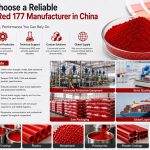
For plastic manufacturers and masterbatch producers, supplier selection is an important part of maintaining stable product quality. A reliable Pigment Red 177 manufacturer should provide consistent quality, technical documentation, production capacity, and application support.
Stable Batch-to-Batch Quality
Color differences between pigment batches can create significant problems for masterbatch and plastic manufacturers. Suppliers should maintain strict quality control to ensure consistent shade and performance.
Technical Data and Documentation
Professional suppliers should be able to provide technical data sheets, safety data sheets, certificates of analysis, and relevant product information.
Application Support
Technical support can help customers select the appropriate grade and optimize pigment performance in different polymer systems.
Reliable Global Supply
International plastic and masterbatch manufacturers need stable supply capacity, suitable packaging, export experience, and dependable delivery schedules.
Quality Control of Pigment Red 177
Quality control is essential for producing reliable high-performance pigments. Important quality characteristics may include color shade, tinting strength, particle characteristics, purity, moisture content, dispersion performance, and thermal stability.
Color Strength Testing
Color strength testing helps ensure that different pigment batches provide consistent coloration during production.
Heat Stability Testing
Thermal stability testing is particularly important for plastic applications involving high-temperature extrusion, injection molding, or compounding.
Dispersion Testing
Dispersion testing helps manufacturers understand how efficiently the pigment can be distributed within the polymer or masterbatch system.
Why Pigment Red 177 Is a Valuable Choice for High-Performance Plastics
The growing demand for durable and visually attractive plastic products has increased the importance of high-performance organic pigments. Manufacturers increasingly need colorants that can withstand demanding processing conditions while maintaining excellent color stability throughout the product's service life.
Pigment Red 177 provides a strong balance of heat resistance, light fastness, weather resistance, chemical stability, and color strength. These properties make it a suitable choice for premium plastic coloration and masterbatch manufacturing applications.
Conclusion
Pigment Red 177 is a high-performance organic red pigment that offers significant advantages for plastic coloration and masterbatch manufacturing. Its excellent heat resistance makes it suitable for demanding plastic processing conditions, while its strong light and weather fastness help maintain color stability during long-term use.
For masterbatch producers, Pigment Red 177 can provide high color strength, reliable dispersion, and consistent red coloration when properly formulated and processed. It can be considered for automotive plastics, engineering plastics, polypropylene, polyethylene, ABS, PVC, packaging, and various other plastic applications.
When selecting Pigment Red 177, manufacturers should consider polymer compatibility, processing temperature, dispersion, migration resistance, light fastness, and the requirements of the final product. Choosing a reliable Pigment Red 177 manufacturer with stable quality, technical expertise, and dependable supply capability can help plastic manufacturers achieve consistent production and high-quality finished products.
Kapcsolódó termékek
 Pigment Red 177 vs Pigment Red 170: Which Organic Red Pigment Should You Choose?
- Pigment Red 177 Technical Data: Heat Resistance, Light Fastness, and Chemical Stability
- What Is Pigment Red 146 and Where Is It Used?
- What Is Pigment Red 177? Properties, Applications, and Benefits Explained
- Pigment Red 146: Properties, Applications, and Technical Guide
- How to Choose a Reliable Pigment Red 177 Manufacturer in China
- Pigment Yellow 97: Properties, Applications, and Technical Guide
- Pigment Red 177 for Industrial Coatings: Why It Is the Preferred High-Performance Red Pigment
- How to Choose the Right Pigment Yellow 97 for Plastics, Coatings, and Inks
- Top Applications of Pigment Red 177 in Automotive Coatings, Inks, and Plastics