Pigment Red 177 Buying Guide: Everything Importers Need to Know Before Purchasing
Purchasing the right organic pigment is an important decision for manufacturers of coatings, plastics, masterbatch, printing inks, automotive products, and other industrial materials. For international buyers, Pigment Red 177 is a high-performance red pigment worth considering when color durability, thermal stability, and consistent product quality are important.
However, importing Pigment Red 177 is not simply a matter of comparing prices and placing an order. Buyers need to understand pigment specifications, application requirements, technical documentation, supplier capabilities, packaging, shipping, and quality control before making a purchasing decision.
Choosing an unsuitable pigment grade can lead to color differences, poor dispersion, processing problems, or inconsistent finished products. A reliable buying process helps importers reduce these risks and establish a stable supply chain.
This Pigment Red 177 buying guide explains everything importers need to know before purchasing C.I. Pigment Red 177, including product characteristics, technical requirements, application suitability, supplier evaluation, sample testing, and international purchasing considerations.
What Is Pigment Red 177?
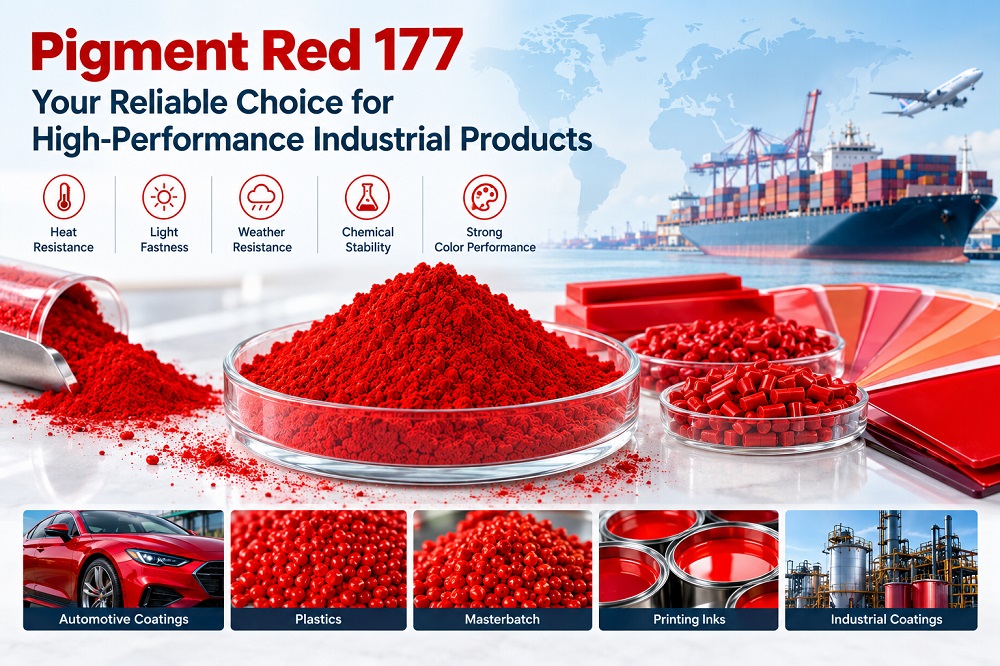
Pigment Red 177, commonly abbreviated as PR177, is a high-performance organic red pigment belonging to the anthraquinone pigment family. It is identified by the Colour Index designation C.I. Pigment Red 177.
Pigment Red 177 is generally associated with a bluish-red shade and is considered for industrial applications that require durable coloration and good resistance to demanding processing and environmental conditions.
Compared with many general-purpose red pigments, PR177 is often selected when manufacturers need a combination of color performance, heat resistance, light fastness, and chemical stability.
Basic Pigment Red 177 Information
- Product name: Pigment Red 177
- Colour Index: C.I. Pigment Red 177
- Abbreviation: PR177
- Pigment type: Organic pigment
- Pigment family: Anthraquinone
- Typical color description: Bluish-red
- Common applications: Coatings, plastics, masterbatch, and selected printing inks
Buyers should remember that products sharing the same Colour Index designation may still differ in particle characteristics, color shade, dispersion behavior, and application performance. The exact commercial grade should always be confirmed with the supplier.
Why Importers Choose Pigment Red 177
International manufacturers often look for pigments that can provide reliable color performance throughout production and during the service life of finished products.
Pigment Red 177 attracts attention because of its combination of durability and color properties. It can be considered for industrial formulations where ordinary red pigments may not provide the required performance.
High-Performance Coloration
Pigment Red 177 offers a strong red color and is commonly considered for applications requiring attractive, durable coloration.
For manufacturers producing branded industrial products, color consistency can be an important part of product quality and customer satisfaction.
Hőellenállás
PR177 is recognized for its strong heat resistance. This makes it a candidate for selected plastic processing and coating applications involving elevated temperatures.
Actual thermal performance depends on the pigment grade, processing temperature, residence time, polymer, and formulation.
Könnyűség
Excellent light fastness is one of the important characteristics associated with Pigment Red 177. It can help support color retention in products exposed to light and sunlight.
This property is particularly relevant for outdoor coatings, automotive products, and selected plastic applications.
Weather Resistance
Pigment Red 177 can be considered for outdoor industrial applications where resistance to environmental exposure is important.
Weather resistance should be evaluated in the complete coating or plastic formulation under the expected service conditions.
Chemical Stability
PR177 provides good chemical stability and can be considered for applications involving suitable industrial coating, plastic, and ink systems.
Manufacturers should conduct chemical resistance testing using the actual finished formulation.
Who Should Buy Pigment Red 177?
Pigment Red 177 may be suitable for different types of international industrial buyers. The best purchasing decision depends on the buyer's application, production process, technical requirements, and expected order volume.
Coating Manufacturers
Coating manufacturers may purchase Pigment Red 177 for automotive coatings, industrial coatings, powder coatings, and selected architectural coating systems.
These buyers should focus on light fastness, weather resistance, color shade, dispersion, chemical resistance, and compatibility with the coating resin.
Plastic Manufacturers
Plastic manufacturers may consider PR177 for engineering plastics, automotive plastic components, consumer products, and other colored polymer applications.
Heat resistance, migration behavior, polymer compatibility, and dispersion are important purchasing considerations.
Masterbatch Manufacturers
Masterbatch producers use concentrated pigments dispersed in a polymer carrier. They need pigments that can provide strong color performance and stable processing behavior.
Important factors include pigment concentration, thermal stability, carrier resin compatibility, dispersion, and batch consistency.
Printing Ink Manufacturers
Printing ink producers may consider Pigment Red 177 for selected industrial printing applications.
Buyers should evaluate color strength, dispersion, solvent compatibility, chemical resistance, and the requirements of the specific ink system.
Industrial Chemical Importers and Distributors
Specialty chemical importers and pigment distributors may purchase Pigment Red 177 for resale to downstream manufacturers.
These buyers should pay close attention to packaging, technical documentation, supply consistency, and the requirements of their customers.
Define Your Application Before Purchasing
One of the most important steps in buying Pigment Red 177 is identifying the intended application before contacting suppliers.
A pigment grade that works well in one system may not deliver the same performance in another. The application determines which technical properties are most important.
Coatings Application
For coatings, buyers should consider:
- Color shade
- Tinting strength
- Fényállóság
- Weather resistance
- Dispersion
- Gloss and appearance
- Resin compatibility
- Chemical resistance
Automotive and outdoor coating manufacturers may require stronger durability performance than manufacturers producing indoor decorative coatings.
Plastics Application
For plastics, buyers should consider:
- Processing temperature
- Heat resistance
- Polymer compatibility
- Dispersion
- Color strength
- Migration behavior
- Fényállóság
- Weather resistance
The selected pigment should be tested under the actual processing conditions of the target polymer.
Masterbatch Application
For masterbatch, buyers should evaluate:
- Color strength
- Pigment concentration
- Dispersion quality
- Carrier resin compatibility
- Thermal stability
- Extrusion performance
- Batch-to-batch consistency
Printing Ink Application
For printing inks, buyers should evaluate:
- Color strength
- Dispersion
- Solvent resistance
- Binder compatibility
- Transparency or opacity
- Printing performance
- Drying and curing requirements
Important Pigment Red 177 Technical Specifications
Before placing an order, importers should request the manufacturer's technical data sheet and confirm the product specifications that matter to their application.
Technical specifications help buyers compare suppliers and establish quality requirements for future shipments.
Color Shade
Color shade is one of the most important characteristics when purchasing Pigment Red 177.
Although PR177 is generally associated with a bluish-red shade, the actual commercial product may vary in shade depending on the manufacturing process and grade.
Buyers should request a sample and compare it with an approved reference standard before confirming the order.
Tinting Strength
Tinting strength indicates the ability of a pigment to provide color intensity in a formulation.
Strong color strength can help manufacturers achieve the desired shade at an efficient pigment concentration.
However, color strength depends on pigment grade, dispersion, particle characteristics, and the formulation system. It should be evaluated under controlled testing conditions.
Hőellenállás
Heat resistance is especially important for plastic processing and powder coating applications.
Importers should ask for the supplier's available thermal stability information and confirm whether the product is suitable for their processing temperature.
Do not assume that a general heat resistance statement guarantees performance in every polymer or coating system.
Könnyűség
Light fastness describes the ability of a pigment to resist fading or color change when exposed to light.
For outdoor products, automotive coatings, and other light-exposed applications, buyers should evaluate the pigment's light fastness under relevant testing conditions.
Weather Resistance
Weather resistance is important for products exposed to sunlight, moisture, temperature fluctuations, and other environmental conditions.
Buyers should consider the expected service environment and evaluate the complete formulation rather than relying only on pigment-level data.
Chemical Resistance
Chemical resistance can be important for industrial coatings, automotive products, plastics, and selected printing inks.
Importers should identify the chemicals that the finished product may encounter and request relevant test information where available.
Particle Size and Particle Distribution
Particle characteristics can influence pigment dispersion, color strength, transparency, opacity, gloss, and processing behavior.
For demanding applications, buyers should ask whether particle size information or other physical characterization data is available.
Moisture and Purity
Moisture content and purity may be important quality parameters depending on the application and formulation.
Buyers should confirm the relevant specifications and testing methods with the manufacturer.
Request the Right Pigment Red 177 Documents
Professional documentation is an important part of international pigment purchasing. It helps importers evaluate the product, confirm technical suitability, and manage quality requirements.
Technical Data Sheet (TDS)
The Technical Data Sheet provides information about the product's typical properties, applications, and technical characteristics.
Importers should review the TDS to understand whether the pigment is suitable for their intended use.
Safety Data Sheet (SDS)
The Safety Data Sheet provides information related to product hazards, handling, storage, transportation, and emergency procedures.
Importers should obtain the applicable SDS and review the requirements relevant to their destination market and use.
Certificate of Analysis (COA)
A Certificate of Analysis provides quality test results for a particular production batch.
Buyers should confirm which parameters are included and whether the reported results meet the agreed product specifications.
Product Specification Sheet
A product specification sheet can help establish a clear reference for purchasing and incoming quality inspection.
Important parameters may include color, strength, moisture, purity, particle characteristics, and other application-specific requirements.
Regulatory and Compliance Documents
Depending on the destination market and application, importers may need additional regulatory or compliance information.
Buyers should confirm the applicable requirements with the supplier, customs broker, and relevant regulatory authorities.
How to Choose a Reliable Pigment Red 177 Manufacturer
Supplier selection is one of the most important parts of importing Pigment Red 177. A competitive quotation is useful, but it should not be the only basis for choosing a manufacturer.
Importers should evaluate product quality, manufacturing capability, technical support, documentation, and supply reliability.
Manufacturer or Trading Company?
First, determine whether the supplier is an actual Pigment Red 177 manufacturer, a trading company, or a combination of both.
Trading companies may provide useful sourcing services, but buyers who require direct technical communication or long-term supply cooperation should understand the actual production source.
Manufacturing Experience
Look for a supplier with experience producing or supplying organic pigments for industrial applications.
Relevant experience may include pigment chemistry, production control, quality inspection, and application support.
Production Capacity
Production capacity should match your expected purchasing volume.
Ask about standard order quantities, minimum order quantity, production lead time, and the supplier's ability to support regular commercial orders.
Quality Control System
A reliable manufacturer should have appropriate procedures for raw material inspection, production monitoring, finished product testing, and batch management.
Consistent quality is especially important for manufacturers that use Pigment Red 177 in continuous production.
Technical Support
Technical support can help buyers select a suitable pigment grade and address questions related to color, dispersion, processing, and formulation.
Suppliers with application knowledge may provide useful information for coating, plastic, masterbatch, and ink manufacturers.
International Export Experience
For overseas buyers, export experience can help simplify communication, documentation, packaging, and shipping arrangements.
Importers should confirm whether the supplier is familiar with the requirements of their destination market.
Why Buying from China Can Benefit Pigment Importers
China is an important manufacturing and export market for industrial pigments and specialty chemicals. International buyers may consider Chinese suppliers because of their manufacturing capabilities, product range, and potential cost advantages.
However, the benefits of sourcing from China depend on the supplier selected and the specific purchasing requirements.
Competitive Manufacturing Costs
Chinese manufacturers may offer competitive pricing for industrial pigment products, especially for commercial and bulk orders.
Importers should compare total purchasing costs rather than focusing only on the quoted unit price.
Product Range
Many pigment suppliers offer different grades and product solutions for coatings, plastics, masterbatch, and industrial applications.
A broader product range can make it easier for buyers to evaluate suitable pigment options.
Production and Export Capability
Experienced Chinese pigment manufacturers may have established production and export processes for international customers.
Buyers should still verify the supplier's actual manufacturing capability and delivery performance.
Direct Supplier Communication
Direct communication with a manufacturer can help buyers discuss product specifications, samples, packaging, and long-term purchasing requirements.
How to Compare Pigment Red 177 Suppliers
When comparing multiple suppliers, importers should use a structured evaluation process. This makes it easier to identify the best overall supplier rather than choosing based on price alone.
Product Quality
Compare technical specifications, sample performance, color consistency, and available quality documentation.
Price and Total Purchasing Cost
Compare the product quotation together with packaging, shipping, insurance, customs-related costs, and other relevant expenses.
Minimum Order Quantity
Check whether the supplier's MOQ is suitable for your purchasing plan.
For new suppliers, a manageable trial order may be useful before committing to larger quantities.
Lead Time
Ask about sample lead time, production lead time, and expected shipping arrangements.
Packaging
Confirm the standard packaging size, packaging material, labeling, and suitability for international transportation.
Technical Service
Evaluate how clearly the supplier responds to technical questions and whether they can support application testing.
Supply Reliability
Consider the supplier's ability to provide consistent quality and reliable delivery over the long term.
Always Request Pigment Red 177 Samples
Sample testing is one of the most important steps before purchasing commercial quantities of Pigment Red 177.
A sample allows the buyer to evaluate the actual product rather than relying only on the supplier's description.
Why Sample Testing Matters
Two products with the same Colour Index designation may not perform identically in every application.
Sample testing helps buyers evaluate color shade, tinting strength, dispersion, heat stability, and other application-specific properties.
Color Matching Test
Compare the sample with an approved color standard using the intended formulation.
Record the shade, strength, and other relevant optical characteristics.
Dispersion Test
Evaluate how the pigment disperses in the selected coating, polymer, ink, or carrier resin system.
Poor dispersion can lead to uneven coloration, reduced color strength, and surface defects.
Heat Stability Test
For plastics and powder coatings, test the pigment under the expected processing or curing conditions.
Evaluate whether the finished product maintains the required color and appearance.
Light Fastness Test
For outdoor applications, evaluate color stability under suitable light exposure conditions.
Testing should reflect the requirements of the finished product.
Chemical Resistance Test
For industrial applications, test the finished formulation against the chemicals it may encounter during use.
Pigment Red 177 Packaging and Storage
Packaging and storage are important considerations when importing pigment products. Suitable packaging helps protect the product during transportation and warehousing.
Standard Packaging
Ask the supplier about standard packaging sizes and materials.
Packaging should be suitable for the pigment's physical characteristics and the expected transportation conditions.
Moisture Protection
Appropriate packaging can help reduce the risk of moisture exposure and contamination during storage and shipment.
Buyers should follow the manufacturer's storage recommendations.
Product Labeling
Confirm that product labels provide the necessary identification and handling information for the shipment and destination market.
Warehouse Conditions
Importers should store Pigment Red 177 according to the supplier's recommendations and applicable safety requirements.
Proper storage can help maintain product quality before use.
International Shipping Considerations for Pigment Red 177
Importing Pigment Red 177 involves more than product selection. Buyers should also consider shipping arrangements, customs documentation, and destination-market requirements.
Shipping Method
Discuss the appropriate shipping method with the supplier and logistics provider.
The choice may depend on order quantity, destination, delivery schedule, and applicable transportation requirements.
Export Documentation
Confirm which commercial and shipping documents will be provided with the order.
These may include commercial invoices, packing lists, shipping documents, and applicable product documentation.
Customs Requirements
Importers should confirm the applicable customs classification, import requirements, and documentation with their customs broker or relevant authorities.
Delivery Time
Discuss production lead time, shipping time, and possible delays before confirming the purchasing schedule.
Reliable delivery planning is especially important for manufacturers that depend on continuous pigment supplies.
How Much Pigment Red 177 Should You Buy?
The appropriate purchasing quantity depends on the buyer's application, production volume, storage capacity, and supplier requirements.
Importers should balance purchasing efficiency with inventory management.
Sample Order
For a new supplier, a sample or small trial order can help confirm product suitability before commercial purchasing.
Trial Order
A trial order allows the buyer to evaluate the pigment in actual production conditions and verify delivery and packaging performance.
Bulk Order
After the product has been approved, bulk purchasing may be appropriate for manufacturers with regular pigment consumption.
Buyers should confirm the supplier's MOQ, production capacity, and delivery schedule.
Long-Term Supply Planning
For continuous production, importers should consider expected annual consumption, inventory levels, delivery lead time, and the possibility of future demand increases.
Questions to Ask Before Purchasing Pigment Red 177
Before placing an order, importers should ask the supplier several practical questions.
- Are you the actual Pigment Red 177 manufacturer?
- What is the exact product grade?
- What is the typical color shade?
- Can you provide a Technical Data Sheet?
- Can you provide a Safety Data Sheet?
- Can you provide a Certificate of Analysis?
- What are the recommended applications?
- What are the typical heat resistance and light fastness characteristics?
- Can you provide samples for testing?
- What is the minimum order quantity?
- What is the standard packaging?
- What is the production lead time?
- Can you support application-specific requirements?
- What export markets do you serve?
- Can you support regular bulk purchasing?
Common Mistakes Importers Should Avoid
Several purchasing mistakes can create unnecessary costs or production problems when importing Pigment Red 177.
Choosing Only by Price
The lowest quotation does not always provide the best overall value.
Buyers should compare product quality, technical performance, documentation, delivery reliability, and total purchasing cost.
Skipping Sample Testing
Purchasing a large quantity without testing the product can create risks if the pigment does not meet the requirements of the final formulation.
Sample evaluation is strongly recommended before approving a new supplier.
Ignoring Application Requirements
A pigment suitable for one application may not be suitable for another.
Buyers should define their processing conditions and performance requirements before selecting a grade.
Not Confirming Product Specifications
Importers should confirm the exact product grade, technical specifications, packaging, and quality requirements before placing an order.
Failing to Check Supplier Capability
Buyers should understand the supplier's manufacturing source, production capacity, quality control, and export experience.
Ignoring Delivery Planning
Unclear production lead times or shipping arrangements can affect manufacturing schedules.
Discuss delivery requirements before confirming commercial orders.
Pigment Red 177 for Long-Term Industrial Purchasing
For manufacturers that use Pigment Red 177 regularly, long-term supply cooperation can provide important benefits.
Once a pigment grade has been approved, maintaining stable quality and supply can help reduce production uncertainty.
Consistent Color Quality
Stable pigment quality helps manufacturers maintain consistent color across different production batches.
Reduced Formulation Adjustments
Consistent pigment characteristics can reduce the need for repeated color matching and formulation corrections.
Reliable Supply
A dependable supplier can help manufacturers plan inventory and production more effectively.
Technical Cooperation
Long-term supplier relationships can support application testing, formulation development, and future product requirements.
How to Evaluate the Total Cost of Pigment Red 177
Importers should evaluate the total cost of purchasing Pigment Red 177 rather than looking only at the product price per kilogram.
A lower-priced pigment may not provide the best overall value if it requires higher usage, creates dispersion problems, or causes inconsistent finished product quality.
Product Price
Compare the quoted price based on the same product grade, specification, packaging, and purchasing quantity.
Transportation Cost
Consider shipping, insurance, and other logistics-related expenses.
Testing Cost
Factor in the laboratory testing and product approval requirements for a new supplier.
Production Efficiency
Consider how pigment strength, dispersion, and processing performance may influence pigment consumption and production efficiency.
Quality Risk
Inconsistent pigment quality can lead to additional costs through rejected products, production adjustments, or customer complaints.
Why Choose an Experienced Pigment Red 177 Manufacturer?
For international buyers, a reliable Pigment Red 177 manufacturer should provide more than a product quotation.
The ideal supplier should combine stable manufacturing, technical expertise, quality control, application support, and dependable international service.
Product Quality
A professional manufacturer should be able to provide consistent Pigment Red 177 quality according to agreed specifications.
Technical Expertise
Application knowledge helps buyers evaluate the suitability of PR177 for coatings, plastics, masterbatch, and other industrial systems.
Quality Documentation
Complete technical documentation supports product evaluation, purchasing decisions, and quality management.
Production Capability
Stable production capacity is important for importers that require regular bulk supply.
Export Service
Reliable communication, packaging, documentation, and shipping coordination can support smoother international purchasing.
Pigment Red 177 Buying Checklist
Use the following checklist before approving a Pigment Red 177 supplier.
- Define the intended application.
- Confirm the exact pigment grade.
- Request the Technical Data Sheet.
- Request the Safety Data Sheet.
- Request the Certificate of Analysis.
- Confirm color shade and tinting strength requirements.
- Evaluate heat resistance and light fastness.
- Check dispersion and formulation compatibility.
- Request and test product samples.
- Confirm minimum order quantity.
- Confirm packaging requirements.
- Check production lead time.
- Evaluate supplier manufacturing capability.
- Confirm international shipping and documentation.
- Compare total purchasing value.
- Establish clear quality requirements for future orders.
Conclusion
Pigment Red 177 is a high-performance organic red pigment that can be considered for demanding industrial applications requiring durable coloration, strong heat resistance, excellent light fastness, weather resistance, and chemical stability.
For global importers, choosing the right Pigment Red 177 supplier requires careful evaluation of product specifications, application suitability, technical documentation, sample quality, manufacturing capability, packaging, and international delivery arrangements.
The best purchasing decision is not always the lowest-priced product. A suitable pigment grade with consistent quality and reliable supply can provide greater long-term value for coating manufacturers, plastic producers, masterbatch companies, printing ink manufacturers, and industrial product suppliers.
Before placing a bulk order, buyers should define their application requirements, request technical documents, test samples, compare suppliers, and confirm the commercial and shipping conditions.
By following a structured Pigment Red 177 buying process, international manufacturers can reduce purchasing risks, improve product consistency, and build a more reliable supply chain for long-term industrial production.
Looking for a Pigment Red 177 Supplier?
If your company is importing Pigment Red 177 for coatings, plastics, masterbatch, printing inks, or other industrial applications, selecting a reliable supplier is an important step toward stable product quality.
Contact our pigment team to discuss your application requirements, technical specifications, sample testing, packaging, and bulk purchasing needs.
Request Pigment Red 177 product information and discuss your sourcing requirements with our team today.
Kapcsolódó termékek
 Pigment Yellow 110: Properties, Applications, and Buying Guide for Industrial Manufacturers
- Pigment Yellow 97: Properties, Applications, and Technical Guide
- Pigment Red 177 Technical Data: Heat Resistance, Light Fastness, and Chemical Stability
- Why Pigment Red 177 Is Ideal for Plastic Coloration and Masterbatch Manufacturing
- Infrared Reflective Titanium Dioxide: Properties, Applications, and Buying Guide
- What Is Pigment Red 146 and Where Is It Used?
- How to Choose a Reliable Pigment Red 177 Manufacturer in China
- Pigment Red 177 vs Pigment Red 170: Which Organic Red Pigment Should You Choose?
- What Is Pigment Red 177? Properties, Applications, and Benefits Explained
- Pigment Red 146: Properties, Applications, and Technical Guide